
PTO Reality in 123 Responses
PTO is marketed as a benefit.
Unlimited PTO is framed as trust, flexibility, and balance.
But many people in tech say, “I take time off, but I don’t feel rested.”
This blog looks at PTO as it is experienced, not as it is advertised.
TL;DR
- PTO policy does not predict rest
- Unlimited PTO does not guarantee more time off
- 87% work while on PTO
- “Rest” is subjective and inconsistently defined
- Culture and expectations matter more than policy wording
Survey Scope
I conducted a survey on time off with:
- 130 total responses, 123 valid
- 119 in tech
- U.S. and EU respondents not separated; results likely skew U.S.
- Responses with rest days exceeding PTO were removed (not corrected)
Employment Context
- Tenure: 6 months to 20+ years
- Company sizes: early startup to FAAG
Average Work Week
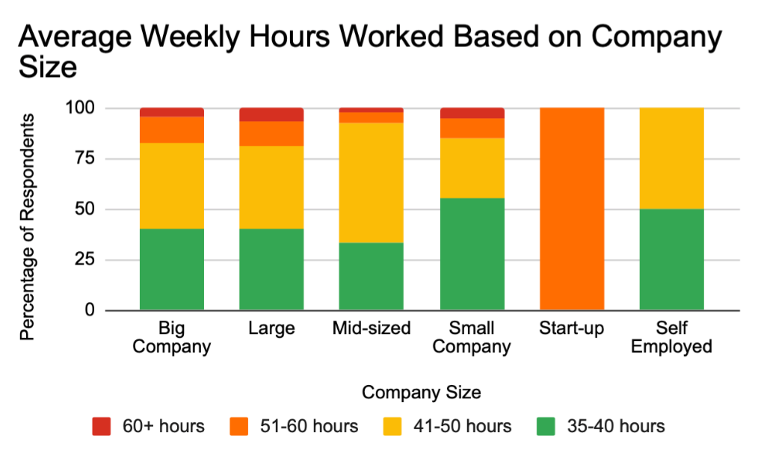
Most people at mid-size and large companies report working overtime every week.
Startups may be an outlier, but respondents there also report longer hours.
Longer work weeks correlate with less rest.
Those working 50+ hours struggle the most to disconnect.
Small companies and self-employed respondents show better work life balance in the survey.
So is PTO really time off, or just comp time in disguise?
Vacation Frequency
- 2% Monthly
- 25% Every 2–3 months
- 49% Every 4–6 months
- 24%Once a year or less
Vacation Days Taken
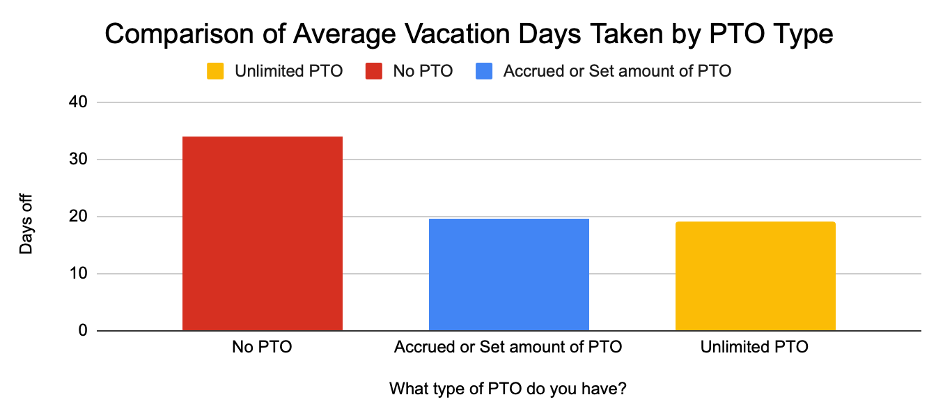
Average Days By PTO Type:
- No PTO: 33.8 days
- Accrued or set PTO: 19.5 days
- Unlimited PTO: 19.1 days
Accrued and unlimited PTO resulted in nearly identical averages, while No PTO was outlier.
PTO Type Based on Employment Length
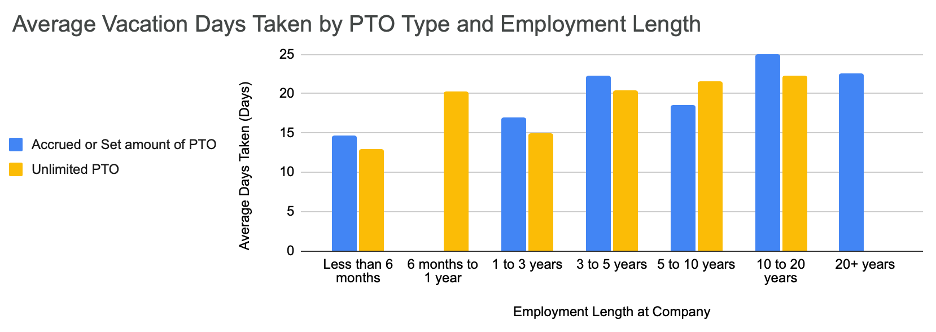
Seniority PTO Trends
- New & early-career (<5 yrs)
- Accrued PTO more time off
- Mid-tenure (5–10 yrs)
- Unlimited PTO slightly more time off (21.5 vs 18.5 days)
- Long-term (10–20 yrs)
- Accrued PTO highest time off overall (25 days)
Over a career, Accrued PTO allows a higher peak in vacation days than Unlimited PTO (25 vs 22.3 days).
Time Off VS True Rest
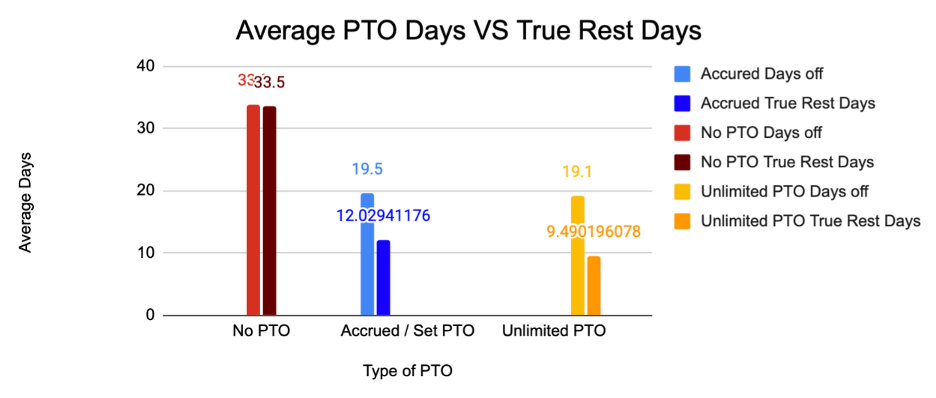
- Unlimited PTO employees take a similar amount of time off (19.1 days) as Accrued PTO employees (19.5 days).
- However, the Unlimited PTO group reports less effective rest: 9.5 True Rest Days compared to 12.0 True Rest Days for the Accrued group.
- The No PTO group is an outlier, taking the most time off (33.8 days) with the highest rate of actual disconnection (33.5 True Rest Days).
| PTO Type | AVG PTO Days Taken | AVG True Rest Days | Gap |
| Accrued PTO | 19.5 | 12.0 | 7.5 days |
| Unlimited PTO | 19.1 | 9.5 | 9.6 days |
| No PTO | 33.8 | 33.5 | 0.3 days |
Unlimited PTO shows the largest gap between time off and rest.
Working While on PTO
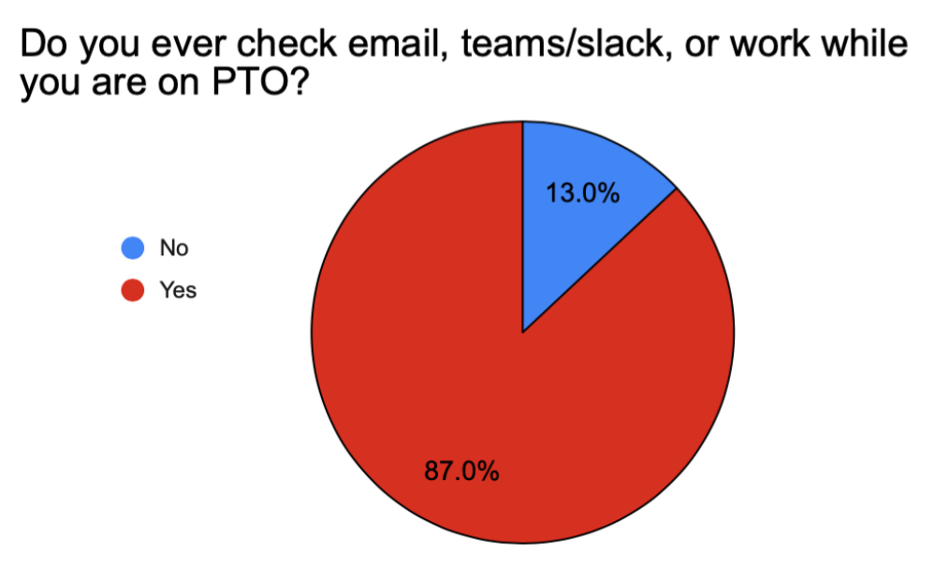
- 87% Check messages or work while on PTO
- 13% Fully disconnect while on PTO.
Pre-Vacation Extra Work
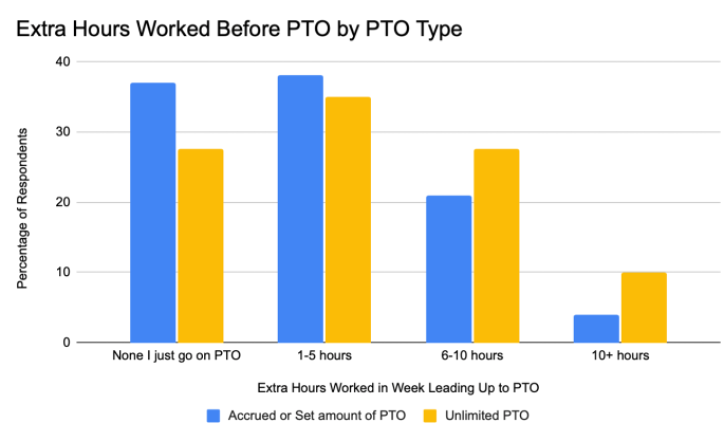
- Unlimited PTO holders are twice as likely to work 10+ extra hours (9.8% vs 4.4%)
- Accrued PTO holders more likely to work 0 extra hours (36.8% vs 27.5%)
- No PTO holders report not working any extra hours before PTO
PTO Guilt
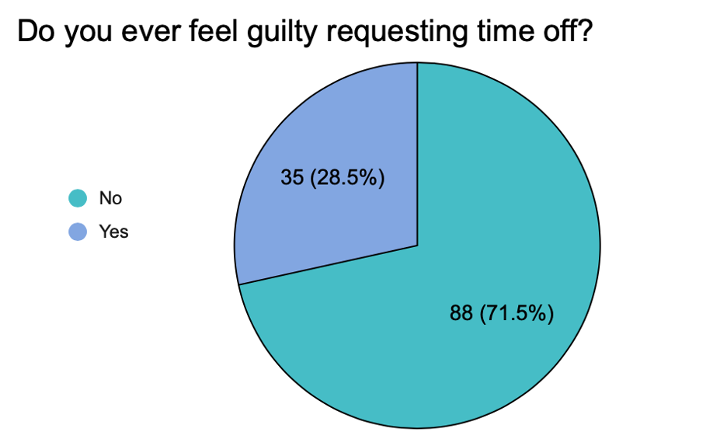
Overall:
- No guilt: 71.5%
- Feels guilt: 28.5%
By PTO type:
- Accrued PTO: 30.9% feel guilty
- Unlimited PTO: 27.5% feel guilty
- No PTO: 0% feel guilty
PTO Preference
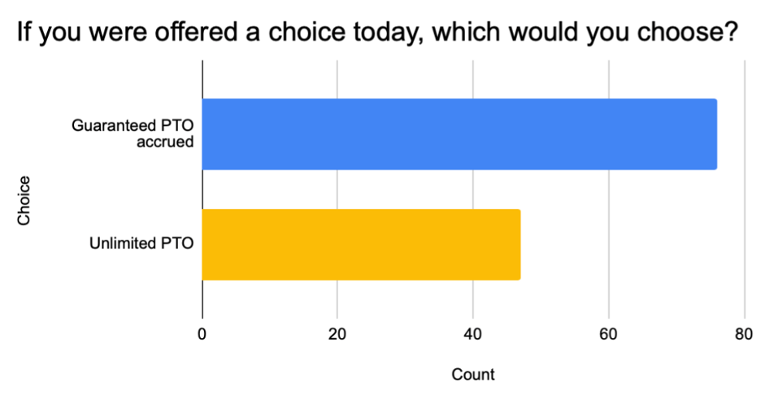
Overall
- 62% prefer guaranteed PTO
- 38% prefer unlimited
By policy
- Unlimited holders: 55% keep, 45% switch
- Accrued holders: 72% keep, 28% switch
- No-PTO: 100% choose guaranteed/ accrued PTO
Guaranteed PTO wins the popularity vote.
Patterns
- Unlimited PTO ≠ more time off
- Unlimited PTO = fewer true rest days
- Working while on PTO is common
- Pre-vacation workload highest for Unlimited PTO
- Most respondents prefer guaranteed PTO
Takeaways
- Policy ≠ Rest
- PTO type alone doesn’t ensure recovery
- Unlimited PTO ≠ more PTO
- Disconnect matters
- Most people work during PTO
- Workload, expectations, and psychological safety should matter more than policy wording
Leave a Reply